ServicesDrywall Hanging
Drywall Hanging in Union City
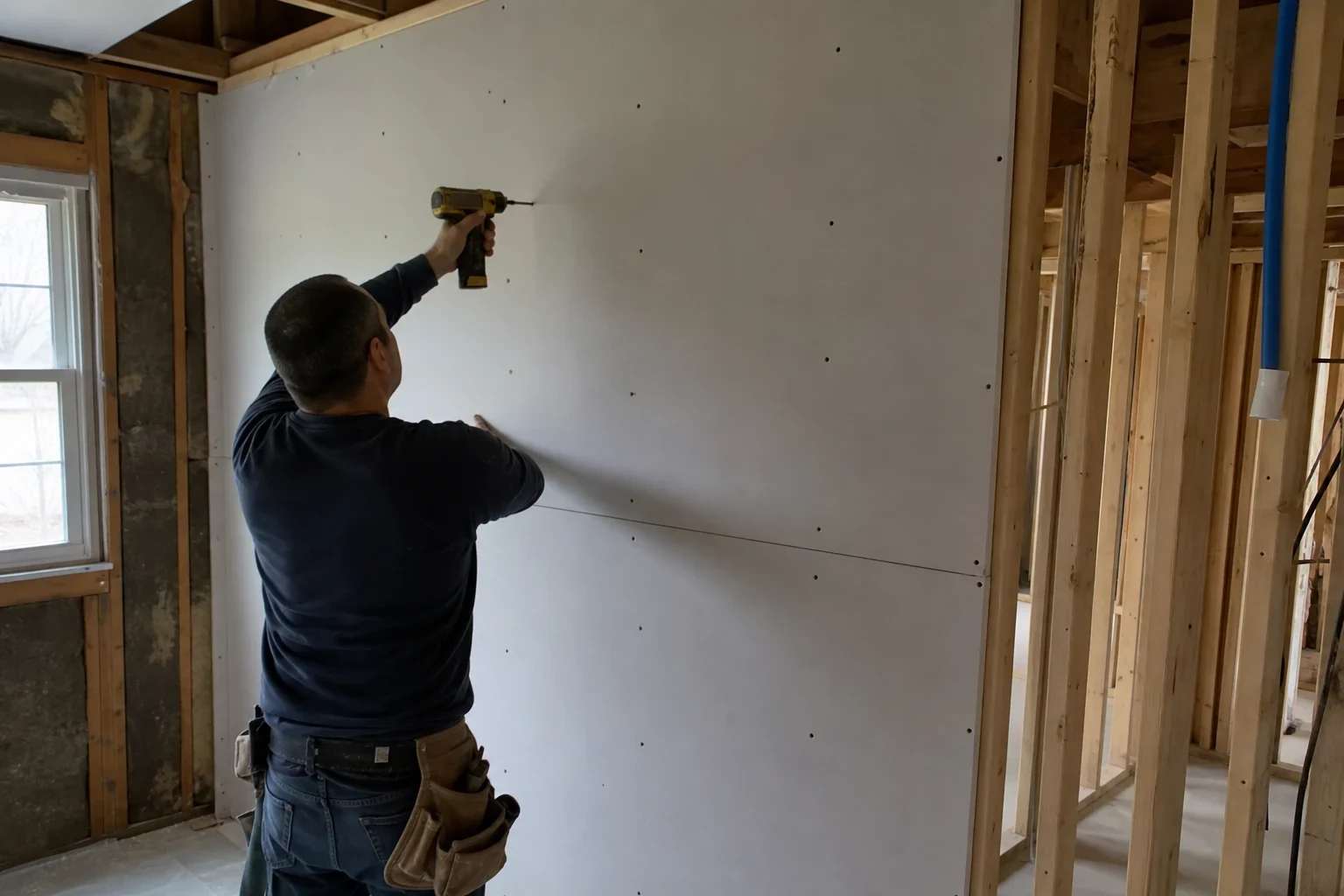
When a wall or ceiling is open to the studs, we hang new drywall with the right board for each room, long sheets that cut down on seams, and fastening that stays tight. You get flat surfaces ready for a clean, even finish.
New board, hung with the finish in mind
Drywall hanging is the step between open framing and a finished wall. It covers gutted rooms after a remodel, new partition walls, finished basements and ceilings that had to come down after a leak. How the board goes up decides how good the final wall looks, so we treat it as careful work, not a rush to cover studs.
Much of the housing around Union City is older, and walls that once held plaster often sit on framing that is a little out of plumb. We check the studs and joists before the first sheet goes up and shim or flag anything that would show as a wave under light.
A single hole or one damaged spot is better handled through our drywall patching or drywall repair work. Here we are talking about new sheets going up over bare framing.
What our drywall hanging covers
- Framing check before we start
- We run a straightedge across studs and joists and look for twists, bows and missing backing. Problems are cheaper to fix now than after the board is on.
- The right board for each room
- Regular half-inch sheets go on ordinary walls. Where humidity runs high, such as a bathroom or laundry room, we use moisture-resistant board, and fire-rated board goes wherever a wall or ceiling requires it. You hear our reasoning before anything is ordered.
- Layout that limits seams
- We plan sheet direction and length so butt joints land on framing and stay away from the middle of a wall where light rakes across them. Fewer joints means less tape, less mud and a flatter result.
- Screws set to the right depth
- Each screw sits just below the paper without breaking it, spaced to keep the board from popping later. Ceilings get closer spacing because gravity works against them.
- Clean cutouts
- Outlets, switches, vents and fixtures are measured and cut tight, so cover plates sit flat and there is less patching around boxes.
- A clean work area at the end
- Offcuts and dust are bagged and removed each day, and floors in the work path stay covered.
When new drywall is the right call
The walls are already open
After a remodel, rewiring or insulation work, the studs are bare and the room needs new board before anything else can happen.
Water damage reached the core
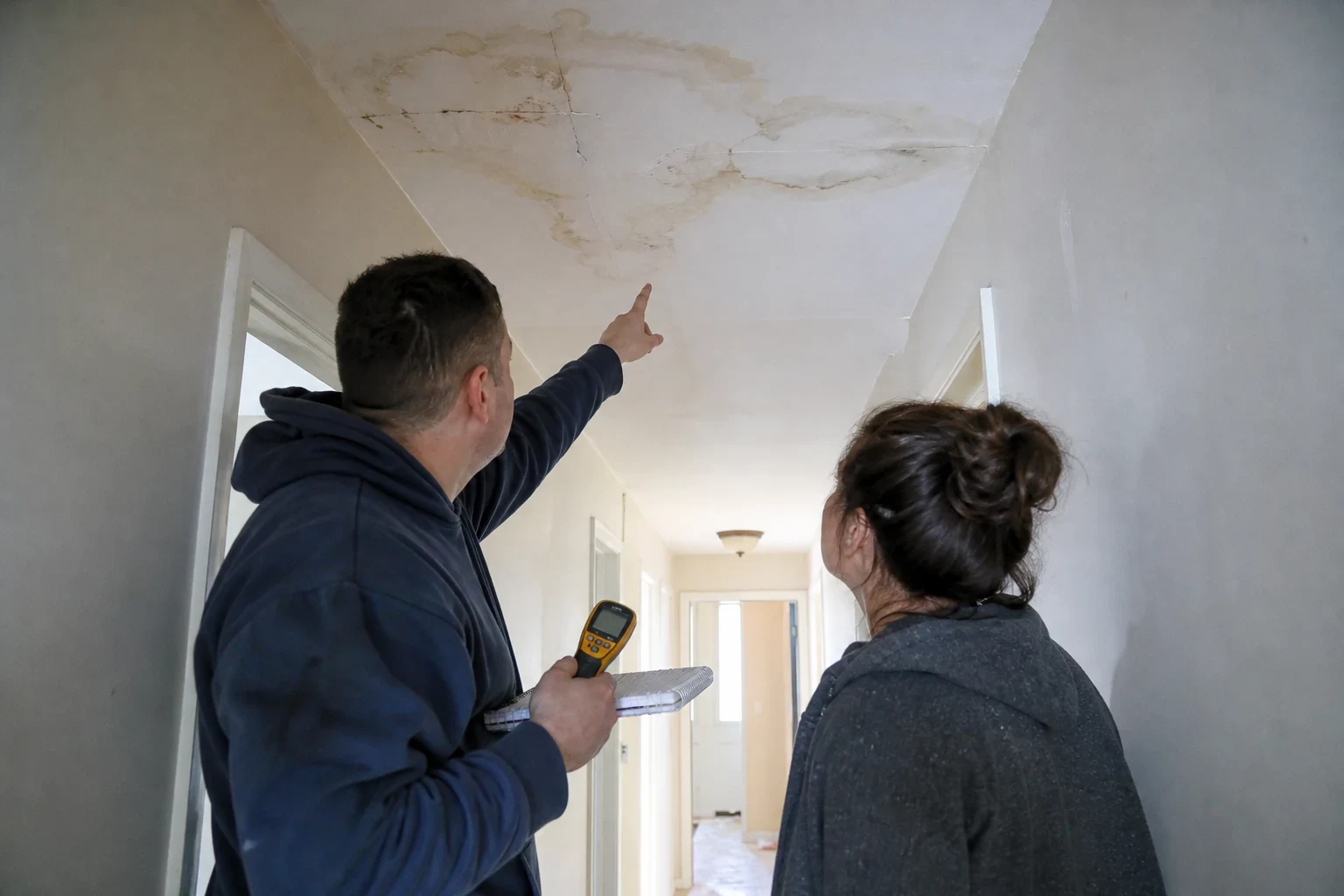
Drywall that stayed wet tends to sag, crumble or grow mold behind the paper. Once it soaks through, replacing whole sheets is usually more honest than patching.
You are adding or moving a wall
A new bedroom divider, closet or office partition needs board hung on fresh framing and tied into the existing walls.
Old plaster is failing in large areas
When plaster is loose across most of a wall, covering or replacing it with drywall can give you a flatter, more stable surface than chasing cracks.
An unfinished space is becoming a room
Basements and attic rooms with open framing need board on walls and ceilings before they feel finished.
How a hanging job runs
- 1
A conversation and a look at the space
You tell us what the room is for and what happened to it. We measure, check the framing and point out anything that needs attention before board goes up.
- 2
A written estimate and a plan
We list the board types, sheet count and work involved line by line, so you can see what you are paying for. We also agree on access, start time and where materials will be staged in your home.
- 3
Protection and delivery
Floors and doorways get covered, and sheets are carried in carefully to avoid dinging finished walls in hallways and stairwells.
- 4
Overhead sheets before the walls
We fasten the ceiling board first, so the wall sheets can tuck up beneath it and help carry its edges. From there we move one room at a time, checking each surface for flatness and cutting openings along the way.
- 5
Walkthrough and next steps
We walk the room with you and show you the layout before taping begins. Most customers have us carry straight on into drywall finishing so one crew owns the final look.
What moves the price of new drywall
We price each job from what we find in your room rather than from a flat rate. Once we have measured and looked over the framing and access, you get a written estimate before work begins. If opening things up turns up something new, we stop and talk it over with you first.
- Square footage and ceiling height
- More area means more board and labor. Ceilings and tall walls take extra time because sheets must be lifted and held in place safely.
- Board type
- Moisture-resistant and fire-rated boards cost more than standard sheets and are heavier to handle.
- Condition of the framing
- Out-of-plumb studs, sagging joists or missing backing may need shimming or added blocking before hanging.
- Access and carrying distance
- Upper floors, narrow stairs and tight hallways slow delivery and sometimes call for shorter sheets, which adds seams.
- Openings and detail
- Many outlets, windows, soffits or angled ceilings mean more cutting and fitting than a plain rectangular room.
Drywall hanging questions
Something not covered here? (201) 740-1898
Once the board is up, can you handle the taping and mudding too?
We can, and most people prefer it that way. Putting up the sheets and finishing the joints are two distinct jobs, and our drywall finishing service picks up right where hanging leaves off with tape, compound and sanding. When the same people own both stages, nobody can blame the other trade for a seam that shows.
How many days does a single room usually take to hang?
An average bedroom can often be boarded in one working day. Tall ceilings, uneven framing and lots of outlets or windows can stretch that out. The finishing stage runs longer because every coat of compound needs time to dry, and we lay out a realistic timeline after seeing the space.
Is it possible to put drywall over existing plaster?
In some rooms, yes. If the plaster is solid and fairly flat, we can fasten a thinner sheet through it into the studs behind. If it is crumbling or badly out of plane, removing it first usually leads to a straighter wall, and we only suggest one approach after looking.
What kind of board belongs in a bathroom?
On bathroom walls away from the shower, moisture-resistant drywall is our usual choice. Inside a tiled shower, ordinary drywall is the wrong material and a dedicated tile backer belongs there instead. We settle the material for each area before anything is ordered.
How much mess does hanging make?
Far less than the sanding that comes later. Scoring and cutting sheets leaves some gypsum dust and scrap pieces, so we lay down floor protection and clear everything away before we leave each day.
Ready to close up those walls
Tell us about the room, the framing and what you want it to become. We will talk through board choices and timing and set up a visit to measure.