ServicesWall Repair
Wall Repair in Union City
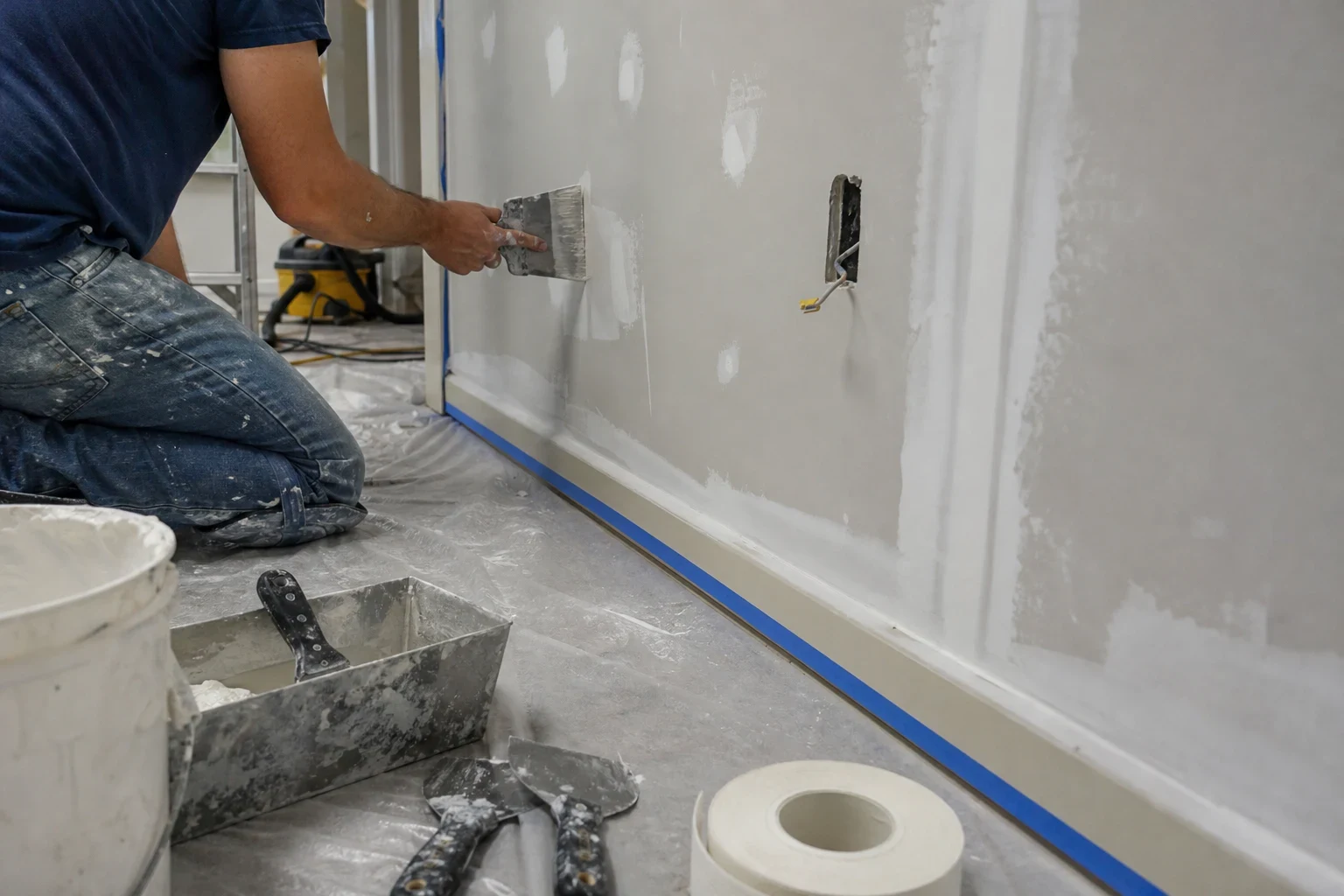
We repair the walls you live with every day: settling cracks, doorknob holes, crumbling plaster, water-stained sections and the dents left after a move. Each repair is rebuilt, sanded and blended into the wall around it, and we leave the room as clean as we found it.
What wall repair covers
Wall repair is the broader job of putting a damaged wall back to sound, flat and ready for paint. Sometimes that means a simple patch. Often it means more: a crack that keeps reopening needs to be cut out and taped, loose plaster needs to be reattached to its lath, and a wall softened by a leak needs the wet section removed before anything goes back on.
Many walls in Union City and the surrounding area are older plaster rather than modern drywall, and the two behave differently. Plaster is hard and brittle, and it cracks in long runs as a building shifts. Drywall dents, tears at the paper face and pops screws. We look at what your wall is made of first, because the right repair depends on it.
If the damage is a single small hole, our drywall patching page may be the closer fit. If you are looking at a whole room of tired walls, wall repair is the right place to start.
What the work includes
- Crack repair that holds
- We open the crack slightly, clear out loose material and bridge it with mesh or paper tape set in compound. Skimming over a crack without taping it is why so many come back after one winter.
- Plaster stabilization
- Where plaster has pulled away from the lath behind it, we reattach it with plaster washers or adhesive before filling. Loose plaster that is only covered tends to sag and crack again.
- Hole and dent repair
- Doorknob strikes, anchor holes, furniture gouges and torn paper are cut clean, backed where needed and filled in thin coats.
- Water-damaged sections
- After the leak behind the wall has been stopped, we cut away whatever is stained or gone soft and give the cavity time to dry out. Then we fit new board, or a patch that works with the surrounding plaster.
- Texture matching and sanding
- We match the surrounding surface, whether smooth, lightly textured or the slight waviness of old hand-troweled plaster, then sand until the edges disappear under your hand.
- Primer and paint touch-up
- Repaired areas are primed so the new compound does not flash through. If you have the original paint, we can do a paint touch-up so the wall is ready to use.
Signs a wall needs attention
Cracks that return
A crack you filled last year is back in the same line. That usually means it was never taped, and it will keep reopening until it is.
Diagonal cracks from door corners
Cracks running at an angle from the corners of doors and windows are common as buildings settle. They are rarely serious but they do need proper reinforcement.
Plaster that sounds hollow
Press gently on the wall. If it flexes or sounds hollow when tapped, the plaster has let go of the lath behind it.
Bubbling paint or brown rings
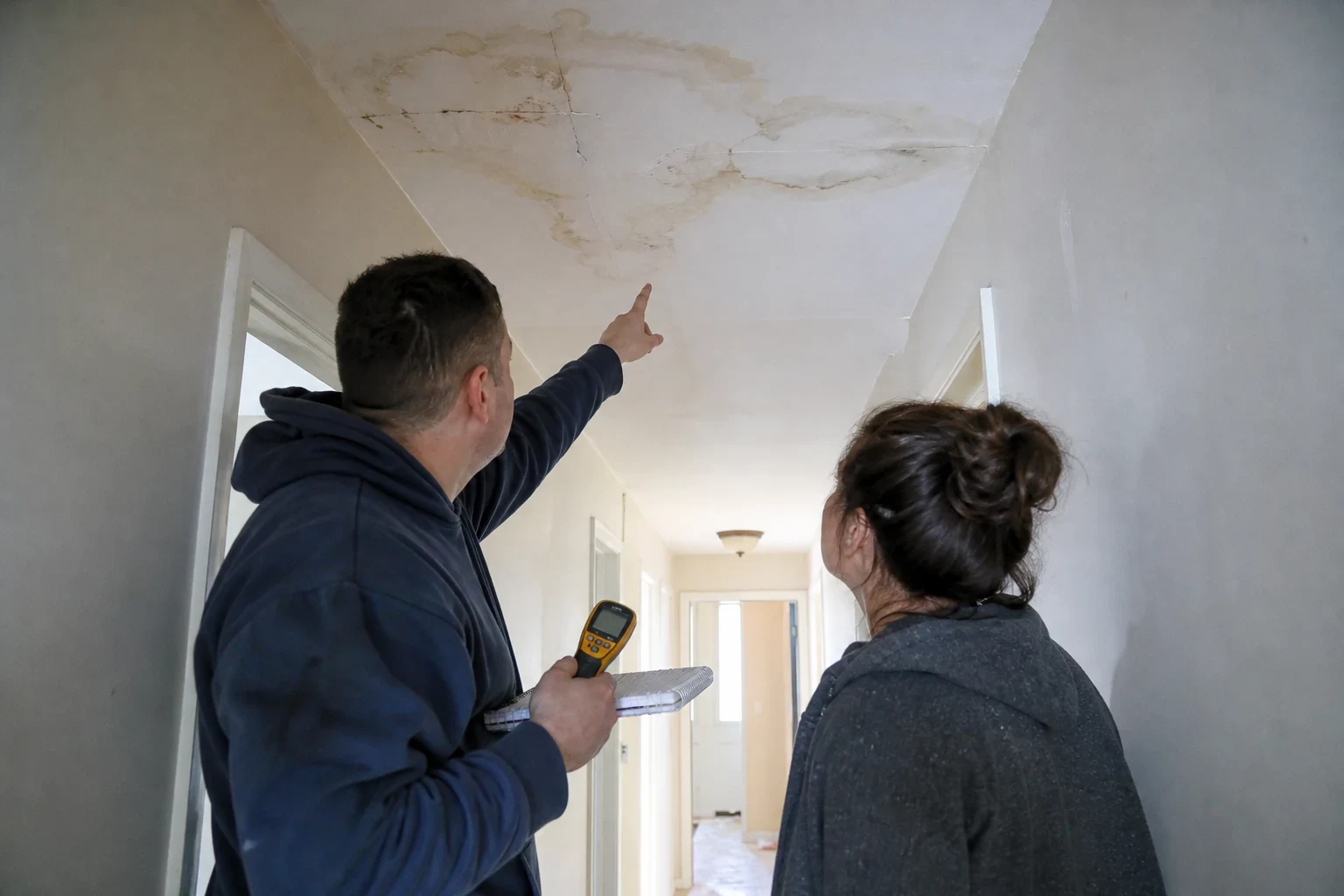
Stains and blistering paint point to moisture inside the wall. Painting over them only hides the problem for a short while.
Popped screws and ridged seams
Small bumps in a line or seams you can see in raking light mean the drywall has shifted or the tape has lifted.
How a repair day runs
- 1
A conversation by phone
You describe the wall, the damage and what the room is used for. We will tell you plainly if it sounds like a quick fix or a larger job.
- 2
Protecting the room
We lay drop cloths, cover nearby furniture and close off doorways with plastic when sanding is involved. Your floors and belongings stay covered from start to finish.
- 3
Repair and drying time
Damaged material is cut out, reinforced and filled. Compound goes on in thin coats with drying time between them, so most wall repair spans more than one visit.
- 4
Sanding and blending
We sand with dust control and check the repair under a work light from several angles, the same way afternoon sun will hit it later.
- 5
A clean work area
We vacuum, fold up the plastic and walk the room with you before we go. If something does not look right to you, we say so and fix it.
What shapes the cost
No two walls fail in quite the same way, so we hear about yours before putting a number on it instead of working from a flat rate. The quote lists each part of the work on its own line, so you can see where the money goes. These are the factors that weigh most.
- Plaster or drywall
- Older plaster takes more steps to stabilize and blend than modern drywall, especially where the lath behind it is loose.
- Size and number of repairs
- One crack is a short job. Several areas across a room, or a wall with many problems, take more material and more visits.
- Finish and texture
- A smooth wall in strong light demands more coats and sanding than a textured one. Matching an old hand-troweled surface adds time.
- Hidden damage
- Water damage sometimes reaches further than the stain shows. If we find more once the wall is open, we show you before going further.
Wall repair questions
Something not covered here? (201) 740-1898
Can you repair plaster, or do you replace it with drywall?
In most cases we repair plaster in place. Reattaching and filling keeps the wall's character and avoids the mess of tearing it out. Where a section is too far gone, we cut it back and fit drywall shimmed to the plaster's thickness so the surface stays flush.
Will the repair show once it is painted?
Our aim is that you cannot find it. We feather the compound well past the damage, match the texture and prime before any paint goes on. Matching paint sheen matters too, so we will ask what paint is on the wall.
How long will the work take?
Small repairs can be finished in a single visit with quick-setting compound. Bigger cracks and water-damaged sections tend to stretch across a few visits, since every layer of compound needs to cure fully before the next one goes on. We will give you a realistic schedule when we talk.
How much dust should I expect?
Very little leaves the work area. We use plastic barriers and dust-controlled sanding, and we clean up at the end of each visit rather than only on the last day.
My wall has a water stain. Can you fix it right away?
Only once the leak itself has been stopped and the wall has dried. Repairing a wet wall traps moisture and the stain returns. We can check the area with a moisture meter before starting.
Let's look at your wall together
Tell us what you are seeing and roughly where it is. We will explain what the repair involves and what to expect, before anyone sets foot in your home.