ServicesDrywall Repair
Drywall Repair in Union City
We repair damaged drywall so the wall looks and feels like it was never hurt. That means cutting back to sound board, setting new material, building the joint in thin coats and sanding it flat before primer goes on.
When drywall repair is the right call
A sheet of drywall is a gypsum core faced with paper on both sides. It cuts and fastens with little effort, yet it wears badly under moisture, impact and movement. A doorknob with no stop, a stud that has shifted or a slow leak inside the wall can leave damage that grows the longer it is left.
Repair makes sense when the framing behind the wall is solid and the damage is limited to the board and its finish. If a section is soft, crumbling or stained through, we cut it out and replace it rather than skim over it. If only the surface is marked, a smaller fix is often enough, and we will tell you which one your wall needs.
We work the way we would want someone to work in our own place: furniture moved and covered, floors protected, and a clean work area left behind at the end of each day.
What our drywall repair covers
- Cutting back to sound material
- We remove damaged gypsum until we reach firm, dry board. Patching over weak edges is why so many repairs crack again a few months later.
- Backing and new board
- Larger openings get wood or metal backing so the new piece sits flush and stays put. We match the thickness of your existing drywall so there is no ridge to hide.
- Tape and compound in thin coats
- Joints are taped and coated two or three times, each one feathered wider than the last. Thin coats dry harder and shrink less than one heavy pass.
- Sanding and texture matching
- We sand with fine grit and check the surface with a raking light. Where your walls carry texture, we reproduce it so the repaired spot reads like the rest of the wall.
- Priming before color
- Fresh joint compound soaks up paint at a different rate than painted board, so a coat of primer goes on first. After that, a paint touch-up can bring the area back to your existing color.
Signs your drywall needs repair
Holes from impact
Doorknobs, furniture and moving day leave dents and punctures. Small ones suit drywall patching; larger breaks need new board.
Cracks that come back
A crack that returns after being filled usually means the joint underneath has failed. We open it, retape it and refinish it properly.
Nail and screw pops
Round bumps or circles along a stud line show fasteners pushing out. Dry winter heat followed by humid summers moves framing enough to cause them in many older buildings around Union City.
Water stains or soft spots
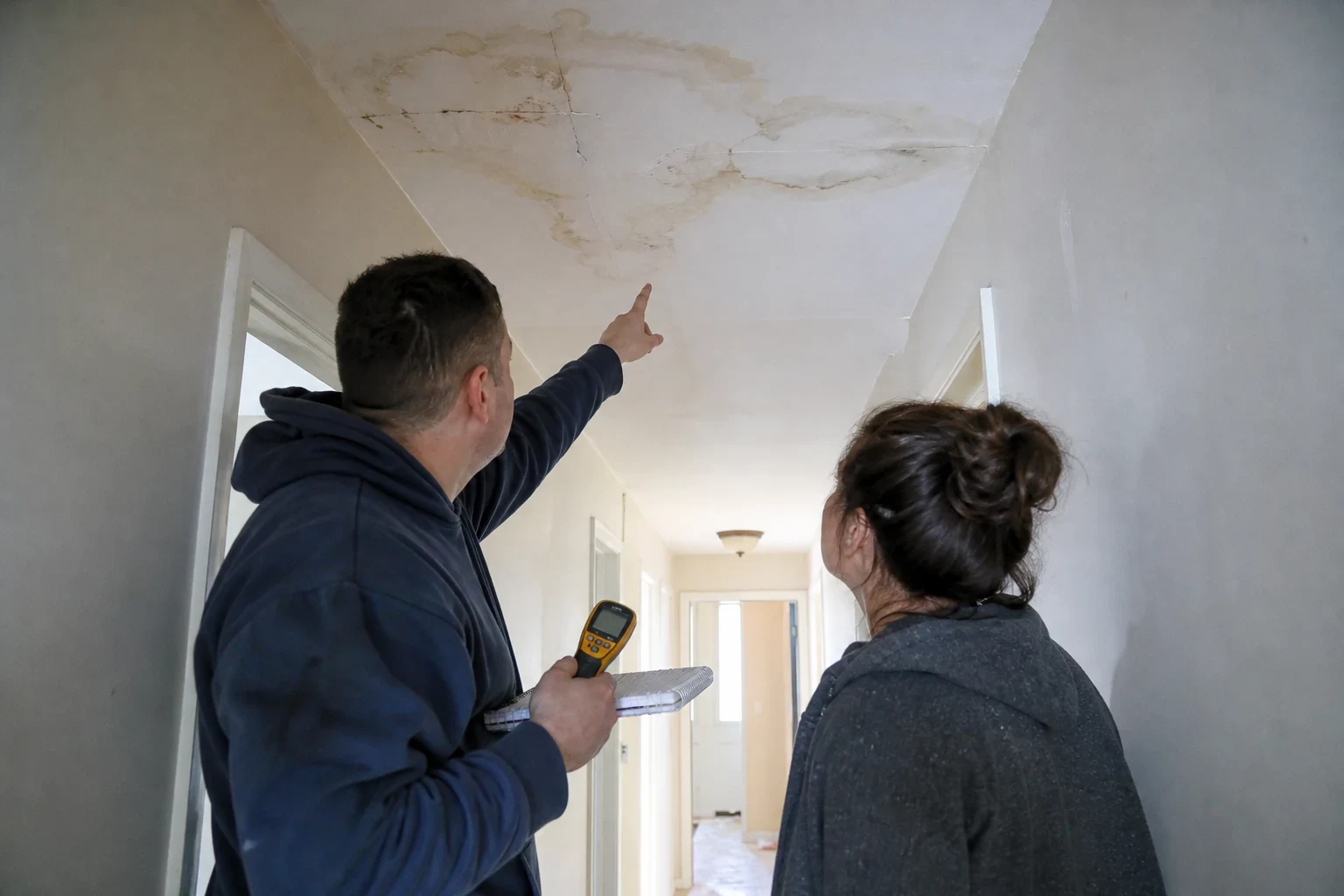
Brown rings, bubbling paper or board that gives under your thumb means moisture got in. Once the leak is fixed, that section should come out.
Peeling tape at the seams
Tape that lifts or bubbles was often bedded without enough compound. It will not stay down on its own.
How a repair day runs
- 1
A conversation by phone
You tell us what happened and where. We ask about size, any moisture and whether the wall is textured, then explain what the work likely involves and how to get your quote by phone.
- 2
Setting up the room
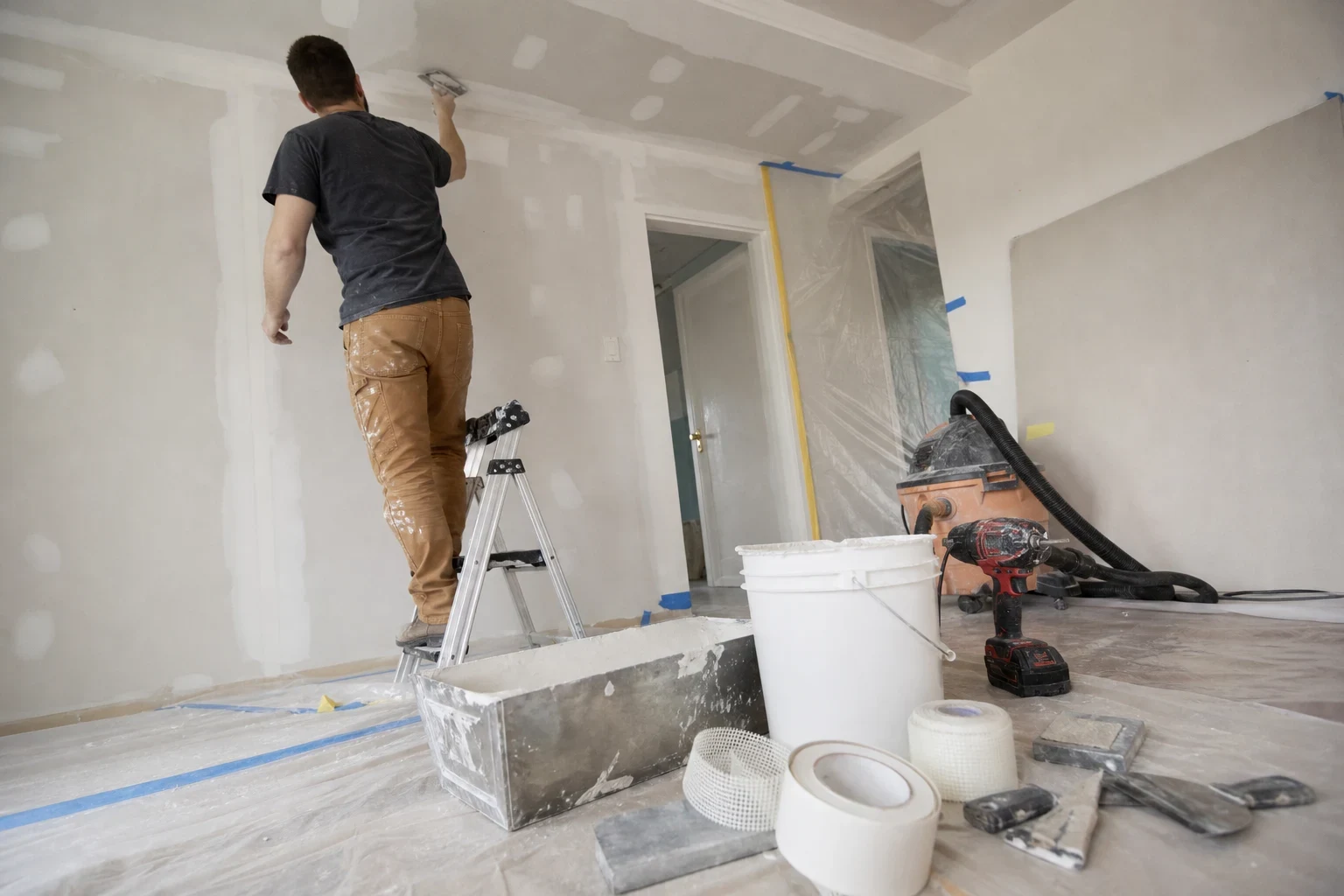
Before any tools come out, floors get drop cloths and furniture near the wall gets covered. When sanding is part of the job, we hang plastic across doorways so dust stays put instead of drifting through your home.
- 3
Repair and first coats
Damaged board comes out, backing and new drywall go in, and the first coats of compound are applied. On most repairs, this is where the first visit ends while compound dries.
- 4
Finishing and cleanup
We return to apply final coats, sand, match texture and prime. Then we vacuum, fold up the protection and walk the finished wall with you.
What affects the cost of drywall repair
Every repair is priced from the wall in front of us, not from a flat menu. Two holes of the same size can take very different work depending on what is behind them and how the wall is finished. We explain each line before any work starts.
- Size and number of areas
- One opening is quicker than several spread across rooms, though grouping repairs into a single visit usually uses time better.
- Conditions behind the board
- Wet insulation, damaged framing or old patches buried under paint mean extra work. If we uncover something like that, we pause and walk you through it before carrying on.
- Wall finish and texture
- A smooth wall under strong window light shows every flaw, so sanding takes longer. Textured walls need matching, which calls for test passes and patience.
- Height and access
- Stairwells, high walls and tight spaces need ladders or staging and slow the work.
- Drying time and visits
- Deeper repairs need overnight drying between coats, so they take more than one trip.
Drywall repair questions
Something not covered here? (201) 740-1898
Will the repair show once it's done?
It shouldn't. We spread compound well beyond the damaged area, sand while checking with a raking light and match any texture on the wall. New paint laid over older paint can leave a faint sheen difference, so we prime first and take care with the paint touch-up.
How long does a typical repair take?
Small repairs can sometimes be finished in one visit with quick-setting compound. Larger sections usually need two or three visits so each coat can dry fully. We give you the expected schedule when you call.
What happens with drywall that got wet from a leak?
We start after the leak itself has been dealt with, so the new board does not get soaked again. Swollen, stained or crumbling gypsum is cut away, the open cavity gets time to dry out, and fresh drywall is fastened in its place. Sealing damp board under new compound would hold moisture against the framing and give mold somewhere to grow.
How much dust should I expect?
Some sanding dust is unavoidable, but we keep it contained with plastic sheeting, floor covers and careful vacuuming. Most customers stay in the rest of their home while we work.
Do you work in rental units with tenants at home?
We do. Landlords and property managers can arrange access, and we keep the work area tidy and small so the tenant can go about their day.
Let's look at that wall together
Tell us what happened and where, and we will explain how we would repair it and what to expect next. If the damage reaches overhead, we handle ceiling repair too.