ServicesDrywall Patching
Drywall Patching in Union City
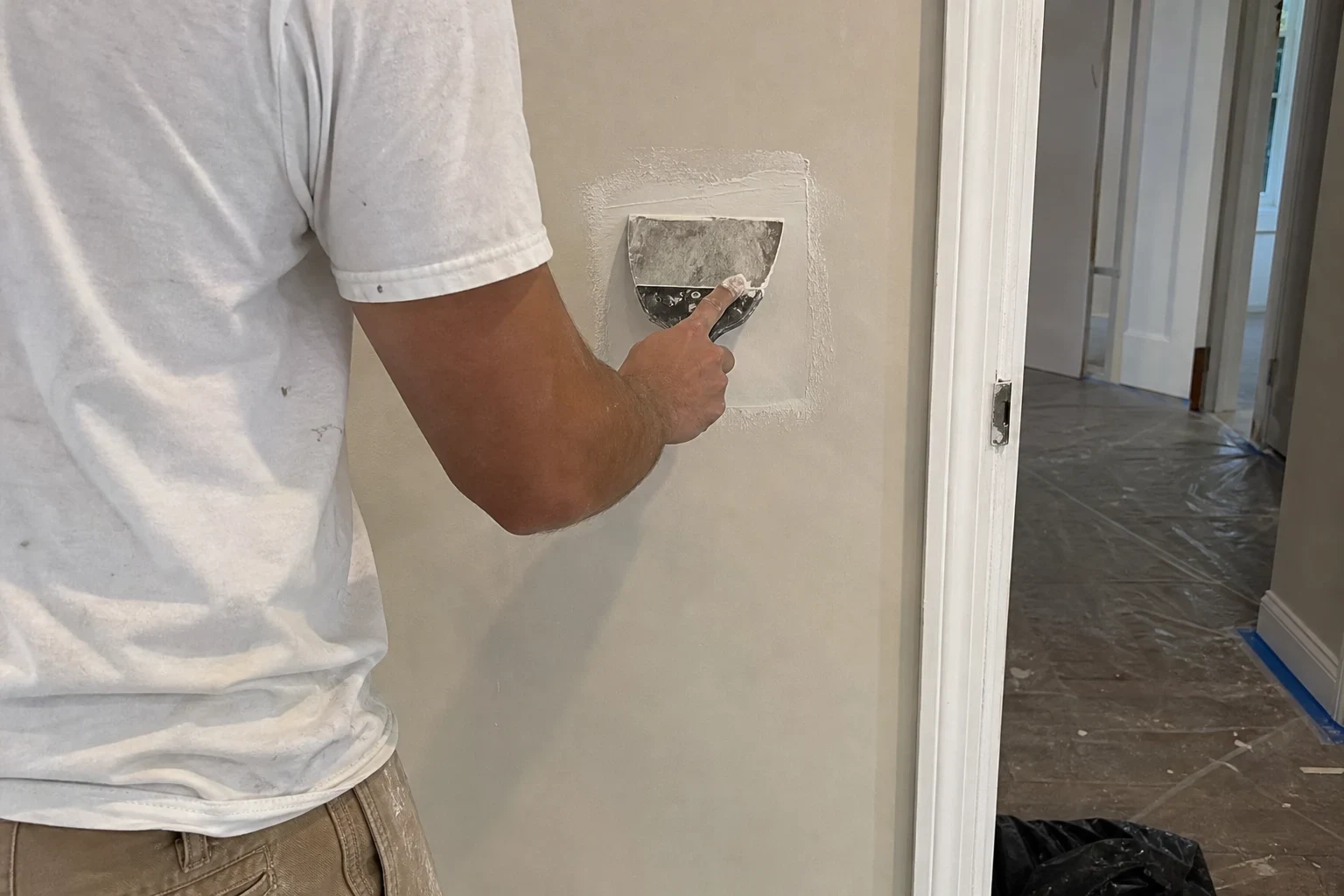
A doorknob hole, a torn-out anchor or an opening left after an electrician's visit can be patched so you stop noticing it. We cut back to sound board, set the right backing, build the compound in thin coats and match the texture around it.
When a patch is the right answer
Patching suits damage that is contained: holes up to roughly the size of a sheet of paper, dents, punctures, popped anchors and access cuts. The surrounding board is still solid and dry, so there is no reason to replace a full sheet. A well-built patch costs less, takes less time and leaves less disruption in your home.
If the board around the hole is soft, stained or crumbling, a patch will not hold. In that case we will tell you plainly, the same answer we would give a neighbor, and talk through drywall repair or a larger section instead. In many older buildings around Union City, some walls turn out to be plaster rather than drywall, and we check that before we promise a method.
What the work includes
- 01
Cutting back to clean edges
Ragged paper and crushed gypsum are trimmed away so the new material bonds to firm board, not loose fragments.
- 02
Backing matched to the hole
Small holes get mesh or a California patch. Larger openings get wood or furring backing screwed in behind, then a fitted piece of drywall of the same thickness.
- 03
Tape and thin coats
We tape the joints and apply compound in several thin coats, each one wider than the last. Thin coats shrink less and crack less than one heavy fill.
- 04
Feathering and sanding
Edges are feathered well past the patch and sanded smooth, with a light held low across the wall to catch ridges before you do.
- 05
Texture blended to the wall
If your wall is flat, the patch is left flat. Where there is a sprayed orange peel, a knockdown pattern or a trowel finish applied by hand, we recreate it so the repair fades out when light rakes across the surface.
- 06
Primer and a clean work area
The patch is primed so paint absorbs evenly, and we leave the room vacuumed and wiped down.
Questions about Drywall Patching?
Call(201) 740-1898Signs a wall needs patching
A hole behind the door
Doors without a stop often drive the knob straight through. It is one of the most common patches we make, and we will mention that a stop would keep it from happening again.
Anchors pulled from the wall
Shelves and TV mounts that come down leave torn, cratered holes that filler alone will not cover cleanly.
Openings left by other trades
Electricians and cable installers often cut access holes and leave them open. These need backing and a proper fitted piece.
Dents and dings that catch the light
Furniture moves and bumped corners leave shallow damage that shows more after fresh paint than before.
An old patch that has started to show
A ring, a bulge or a crack around an earlier repair usually means it was filled too thick or never taped. We remove it and rebuild it properly.
How a patching job runs
- 1
A conversation by phone
You tell us how many holes, roughly how large and which rooms. The more you can describe, the more likely we bring the right material on the first visit.
- 2
Protecting the room
We lay drop cloths, move what needs moving with your permission and cover nearby furniture. Sanding dust is fine and travels, so we contain it close to the wall.
- 3
Backing, board and first coats
The hole is cut, backed and taped, and the first coats of compound go on. Drying time between coats depends on depth and humidity, so larger patches often take a second short visit.
- 4
Sand, texture and prime
Once the compound is fully dry, we sand, match the texture and prime. The wall is then ready for your paint, or for our paint touch-ups if you would like the color blended too.
What moves the price of patching
We price each patching job on what it actually takes rather than charging the same amount for every hole. Once you describe the damage, we walk you through the steps we expect and anything that could change them, so the figure is clear before work begins.
- Size and number of holes
- Several small holes in one room are handled in the same visits. One large opening needs backing and a fitted piece, which adds material and time.
- Texture on the wall
- Smooth walls are the simplest. Knockdown or a hand-applied texture takes more care to blend so it does not stand out.
- Location and access
- A patch at eye level is quicker than one on a stairwell wall or a high ceiling that needs a ladder or scaffold.
- What we find behind the board
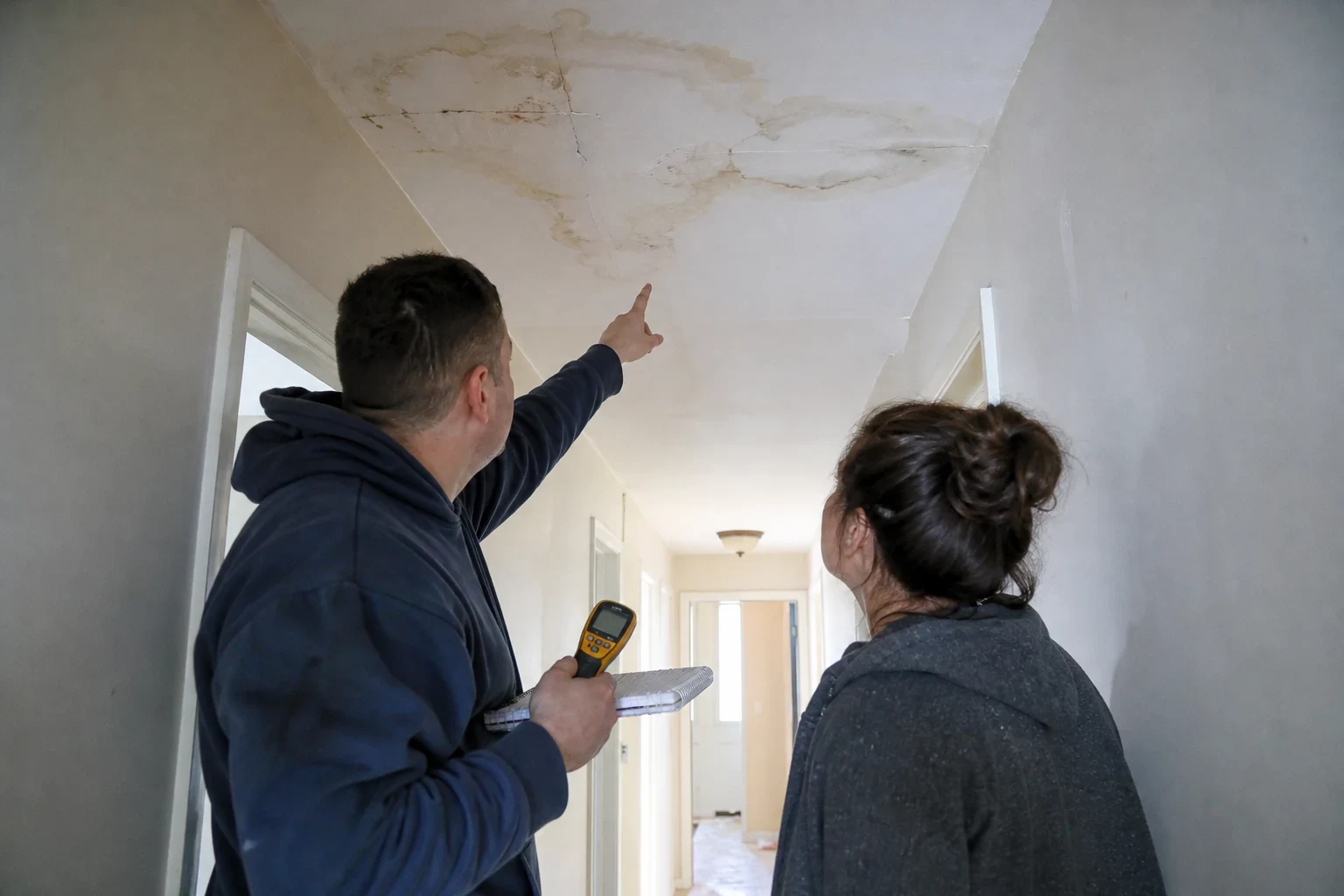
- Moisture, a damaged stud or plaster instead of drywall changes the method. If we find any of these, we show you and talk before going further.
Common questions about patching
Once the wall is painted, will anyone notice the repair?
A patch that has been feathered wide, textured to match and primed should vanish under a fresh coat. When a repair does give itself away, the cause is usually the paint around it: the original color has faded, or the new coat has a different sheen. Before we begin, we look at your existing paint and tell you honestly whether a small paint touch-up will blend or whether the whole wall would look better recoated.
How many visits does patching need?
A few small holes are often done in one trip, because we use a setting compound that hardens quickly. Bigger openings generally mean coming back on a later day, once each coat has dried all the way through. Sanding compound that is still damp is what leads to shrinking and hairline cracks down the road.
Do you paint the patch?
We prime every patch. If you would like it painted to match, we handle that as a paint touch-up. You are also welcome to paint it yourself once the primer has dried.
Can you patch plaster walls?
Many prewar buildings have plaster, and it behaves differently from drywall. We check the wall before quoting and explain what method will hold. If a patch is not the right call, we say so.
Is it worth fixing a patch someone else did?
Usually yes, if it is cracking or bulging. We cut out the failed material, add proper backing or tape and rebuild it in thin coats. It is often less work than people expect.
Let's get that hole out of sight
Give us a sense of the damage and which rooms it is in. On the call we will describe the method we would use and how the visit would go, start to finish.